Portfolio of an AI Design Engineer
One hire. A whole team, run on AI.
Abdullah Omer Himel is an AI Design Engineer. He uses agentic coding, AI workflows and AI media to ship a startup's brand, product UI, code, copy and launch films on his own. His portfolio had to prove it in a minute: the seats he fills, the work behind each one, and what AI did on every piece versus what stayed human.
- ROLE
- AI Design Engineer
- BUILT WITH
- Claude Code, Next.js, Remotion
- YEAR
- 2026
- Positioning
- Copy
- Site design
- Agentic build with Claude Code
- AI-voiced intro film
- CV and share card


Everyone says they use AI. Few can show it.
One person shipping the work of a team reads as a bluff, unless every claim points at the work and says exactly how AI was used.
- 01
A minute, not a portfolio tour
A hiring manager decides on the first screen. Role, time zone and what he is looking for sit there in plain words.
- 02
Six seats, one person
Brand, front end, product, copy, video and AI automation. Each seat links to its own proof, or the list sounds made up.
- 03
AI shown, not claimed
Every problem on the page has a line on what AI did and what stayed human. Nothing over-promises.
- 04
Proof over logos
The work is told as problems solved. Results appear only where a client said them on record.
Every section answers one question a hiring manager asks.
Hero, the 60-second brief, live work, problems solved, AI in practice, skills, process, recommendations, a 90-day plan and contact.
- 01
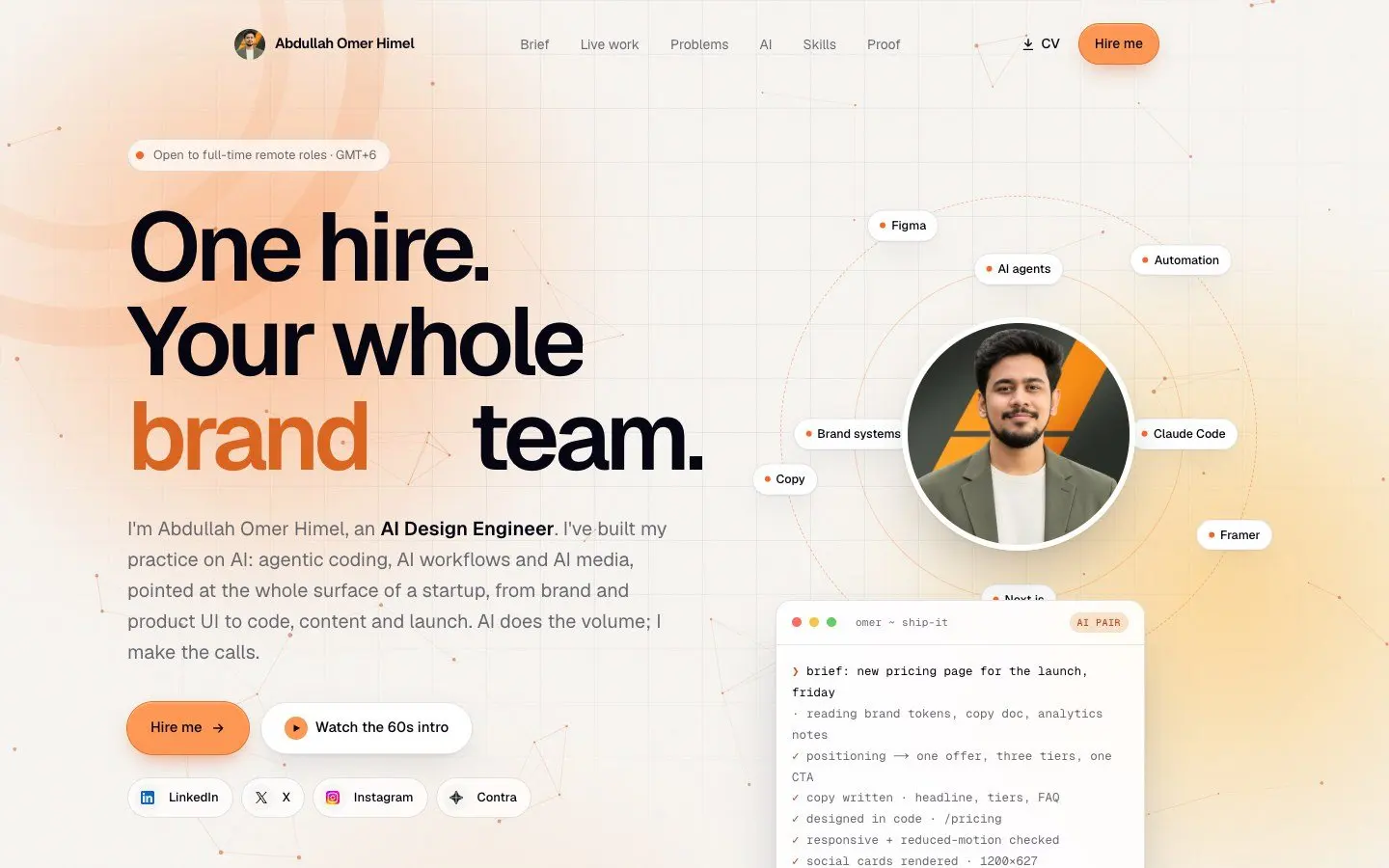
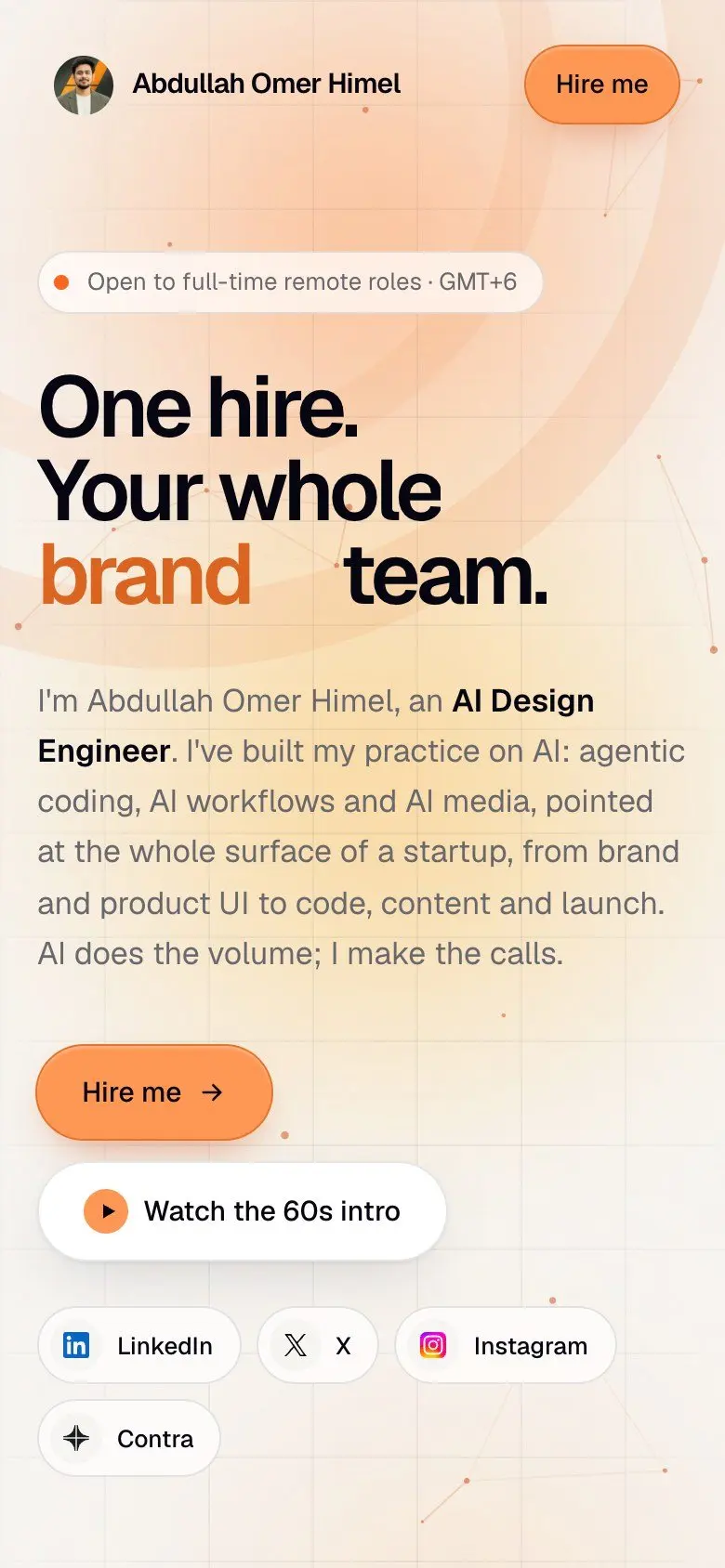
The pitch in one line.
"One hire. Your whole brand team." The last word rotates through brand, product, website, content, launch and growth. AI tools orbit the portrait, and a console shows a brief turning into shipped work, step by step.
- 02
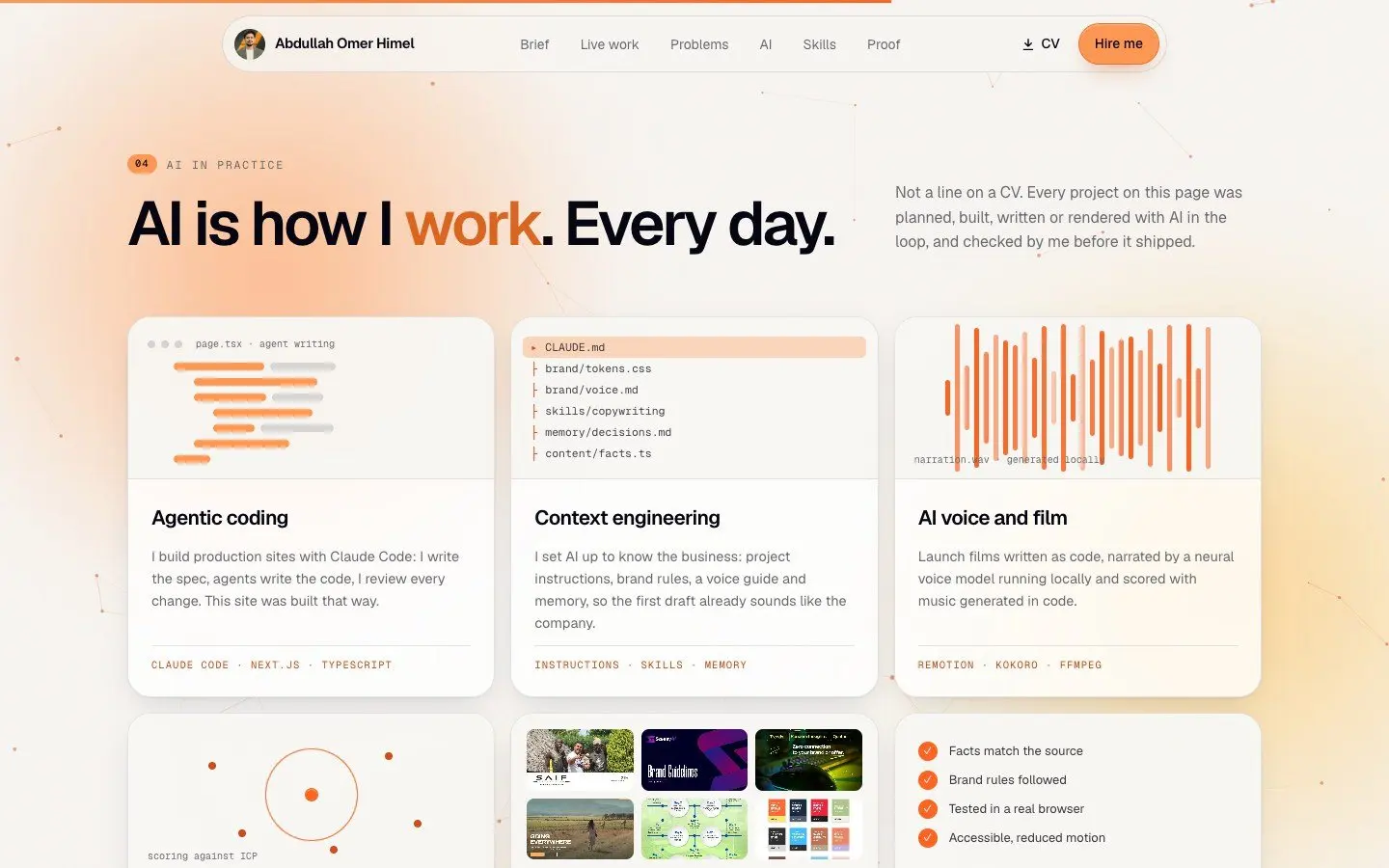
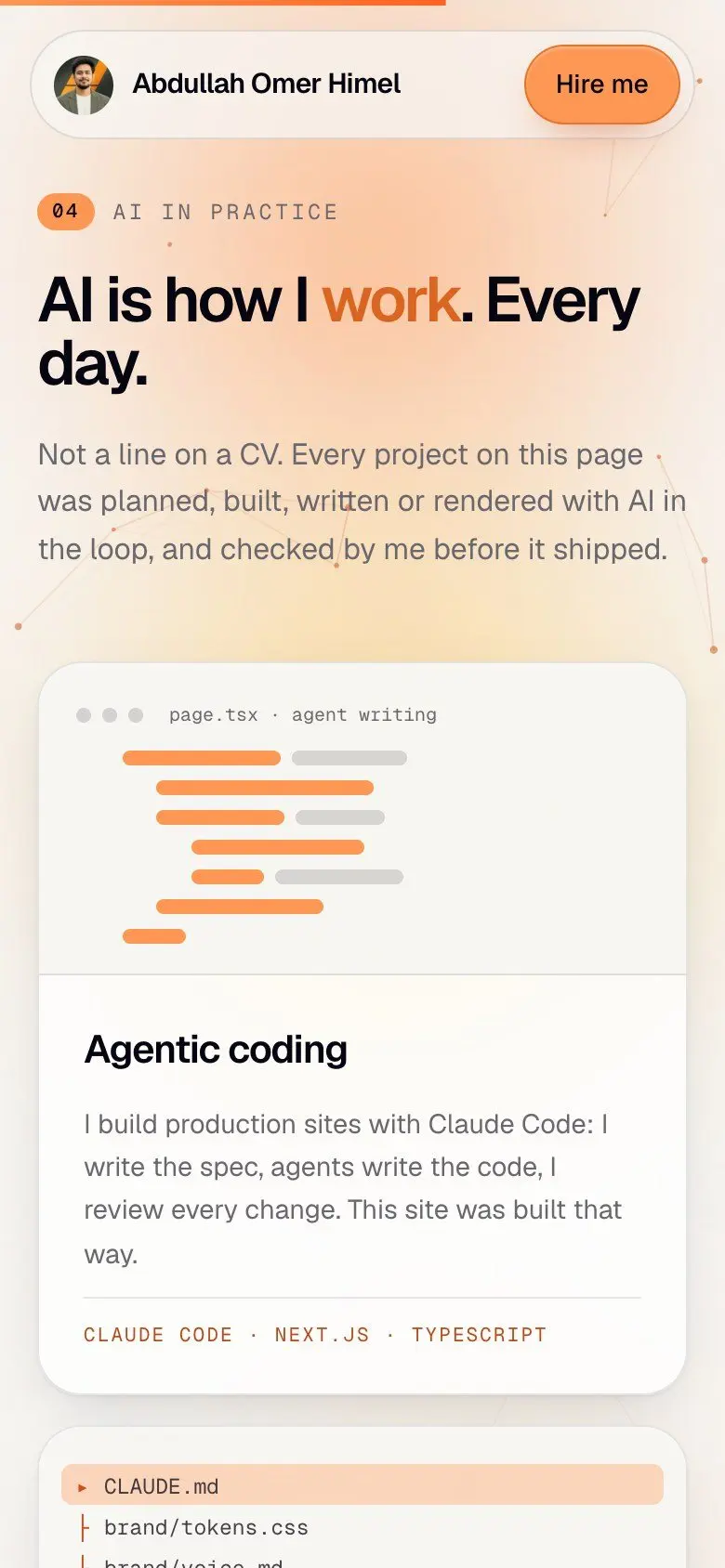
AI in practice, card by card.
Agentic coding, context engineering, AI voice and film, research agents, AI image and video, and quality control. Each card has a small looping visual and the tools behind it.
- 03
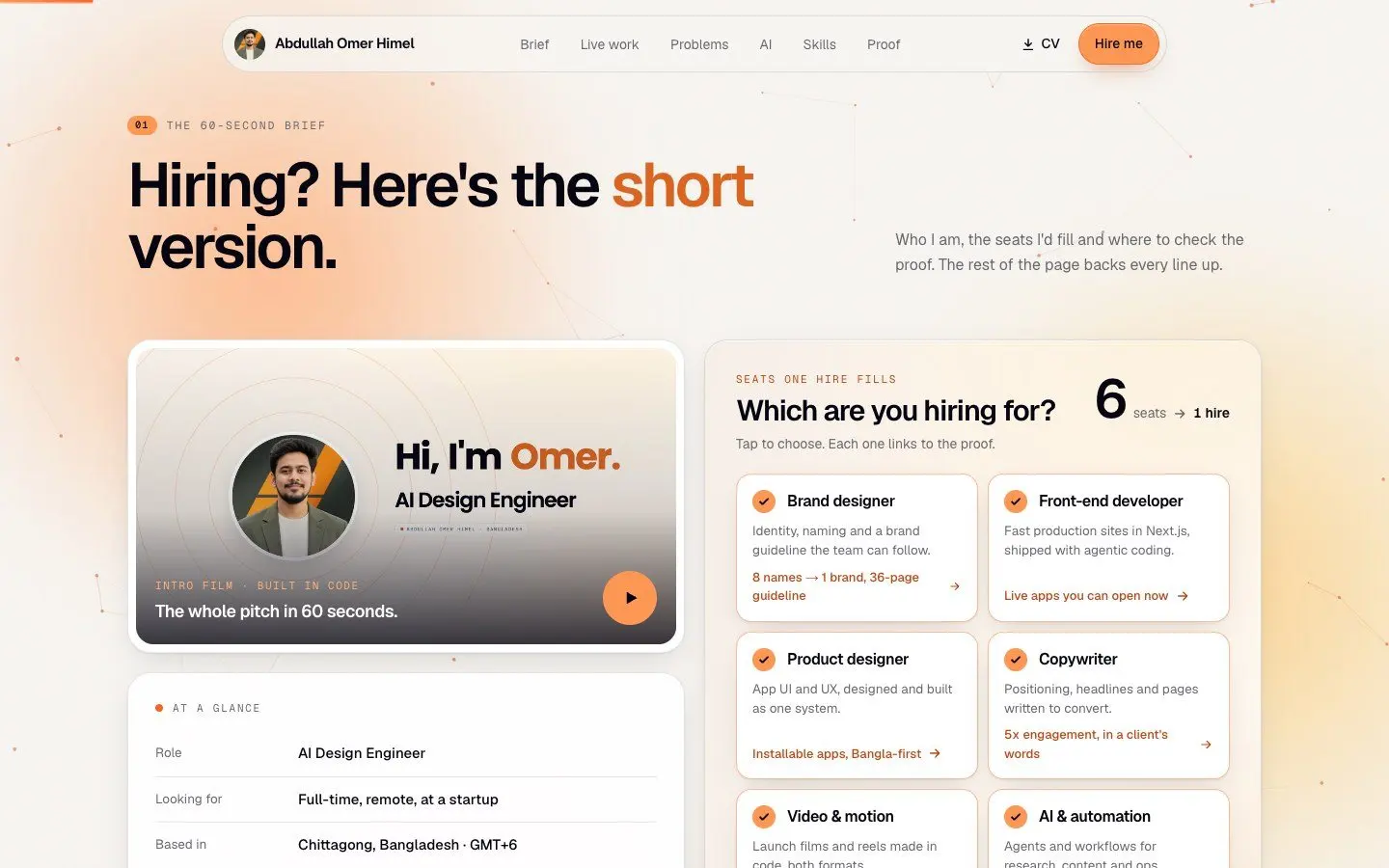
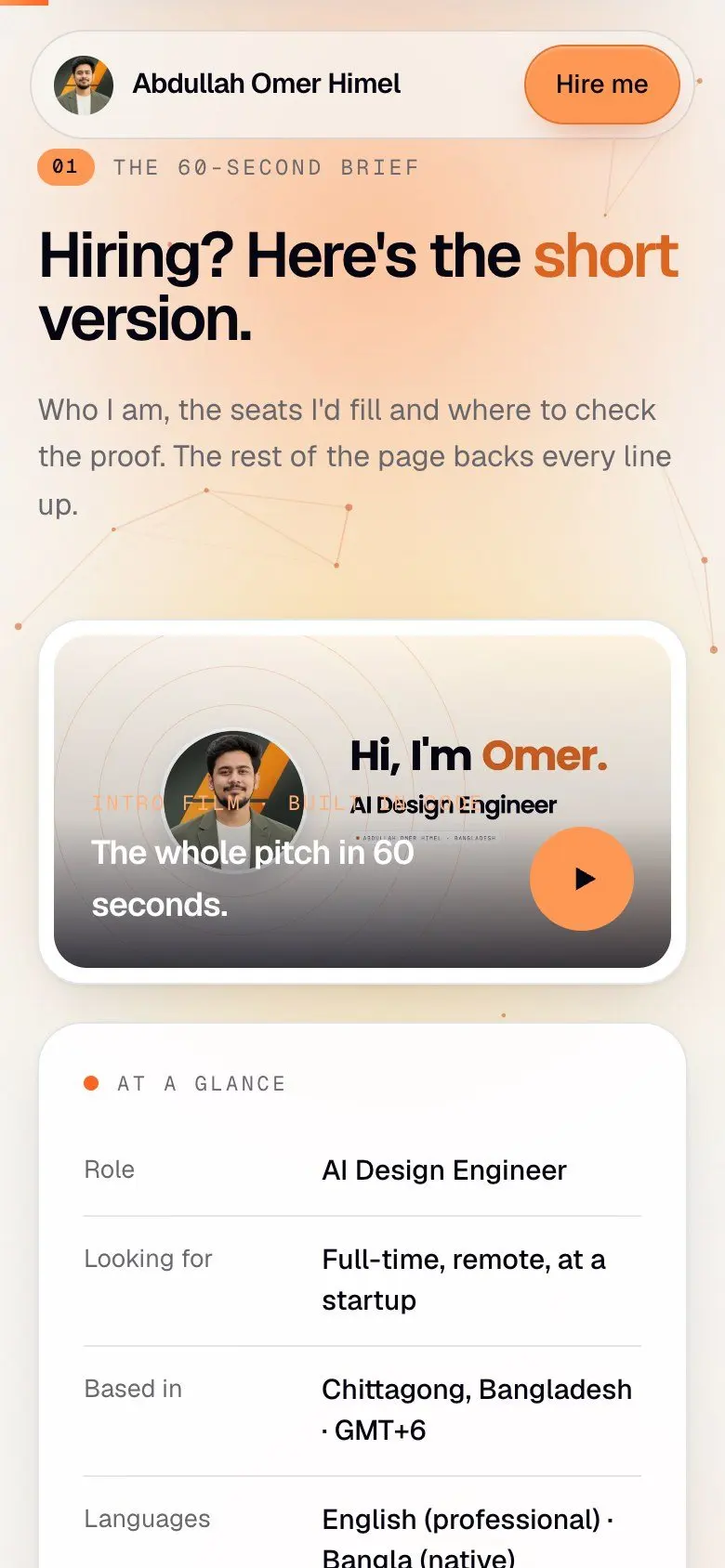
A 60-second brief for the person screening.
A one-minute intro film made in code with an AI voice, the facts a recruiter checks first, and a picker of six seats one hire fills. Each seat links to its proof, and ticking them rewrites the email subject.
- 04
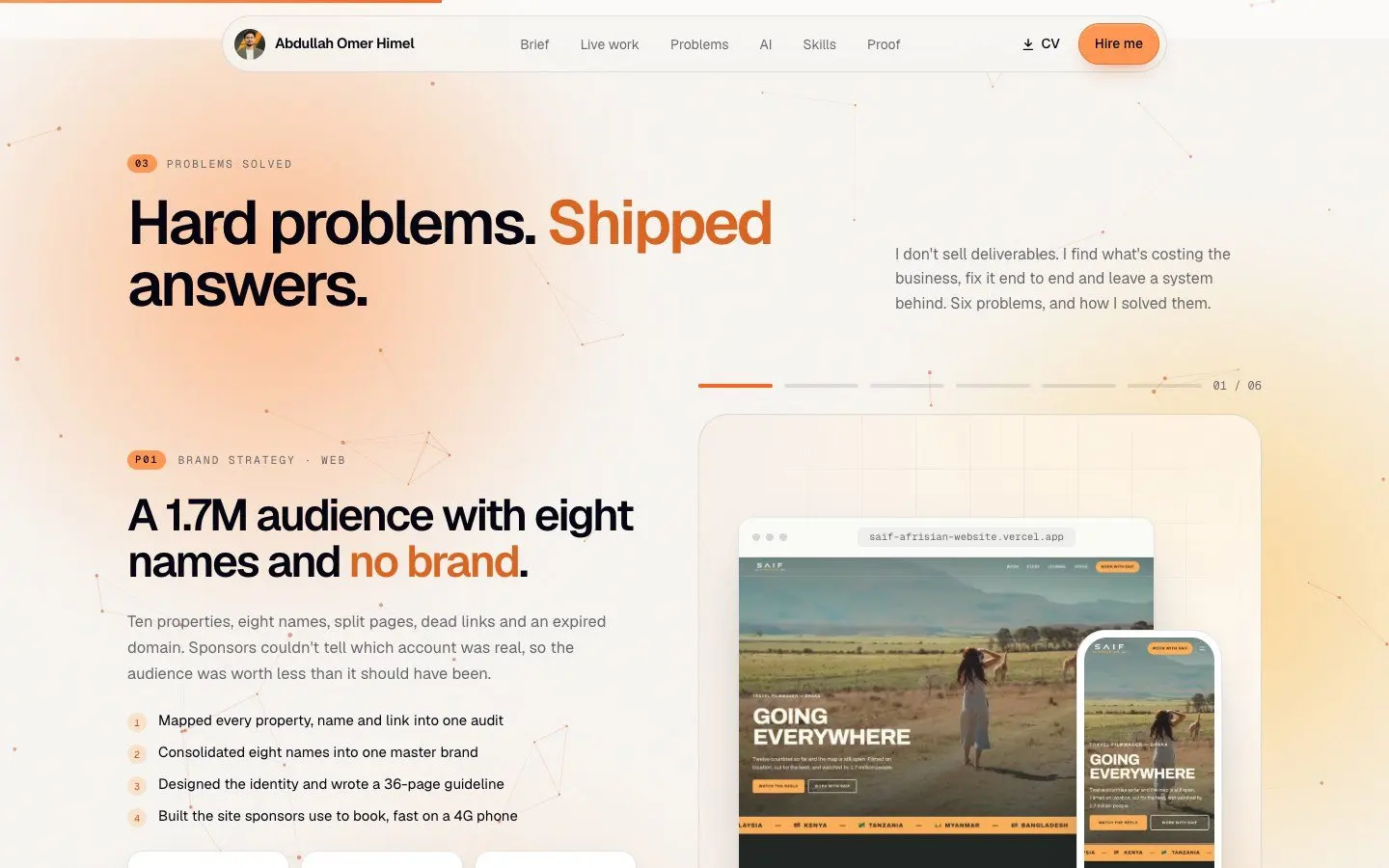
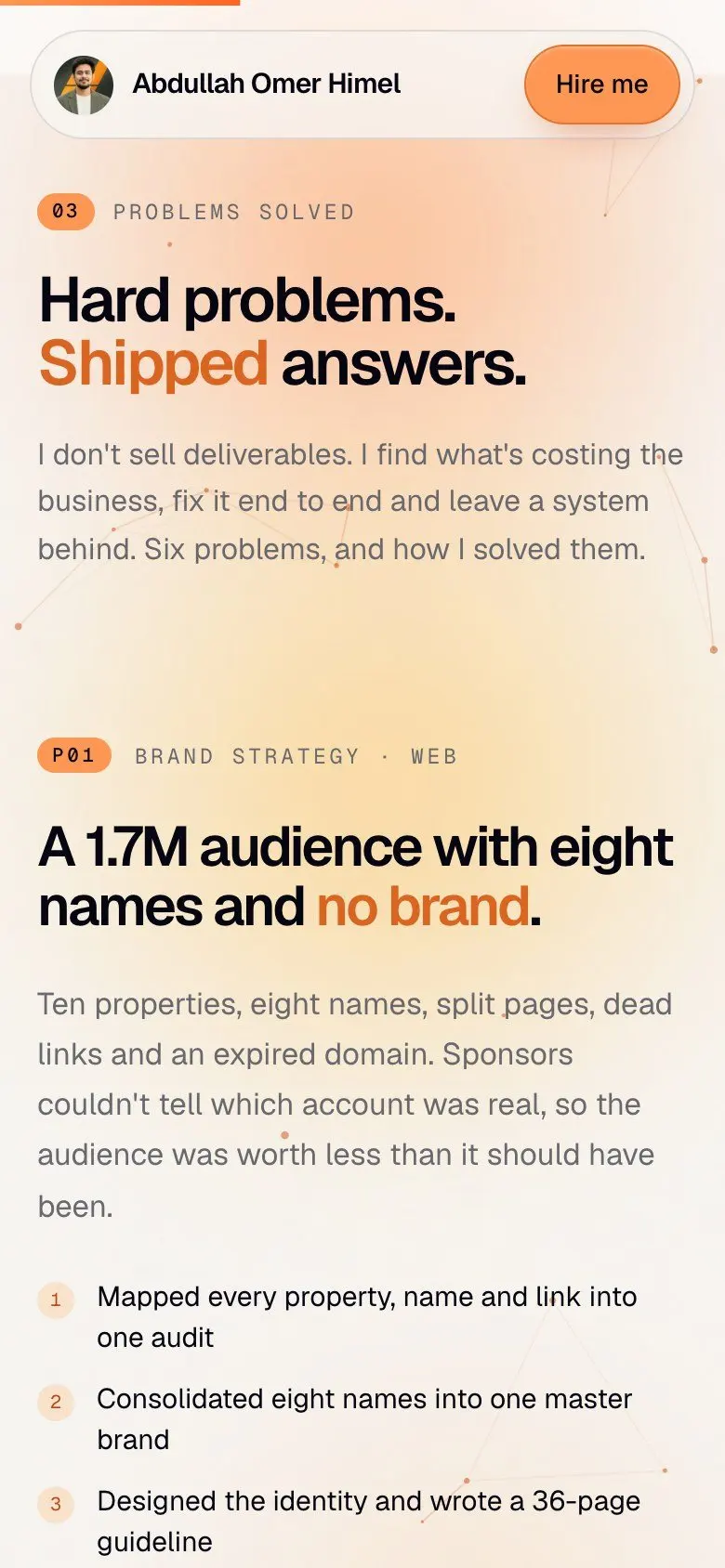
Problems solved, with the AI part named.
Six problems told as a scroll story. The panel beside the text swaps for each one, with a before and after, and a line on what AI did and what he decided.
- 05
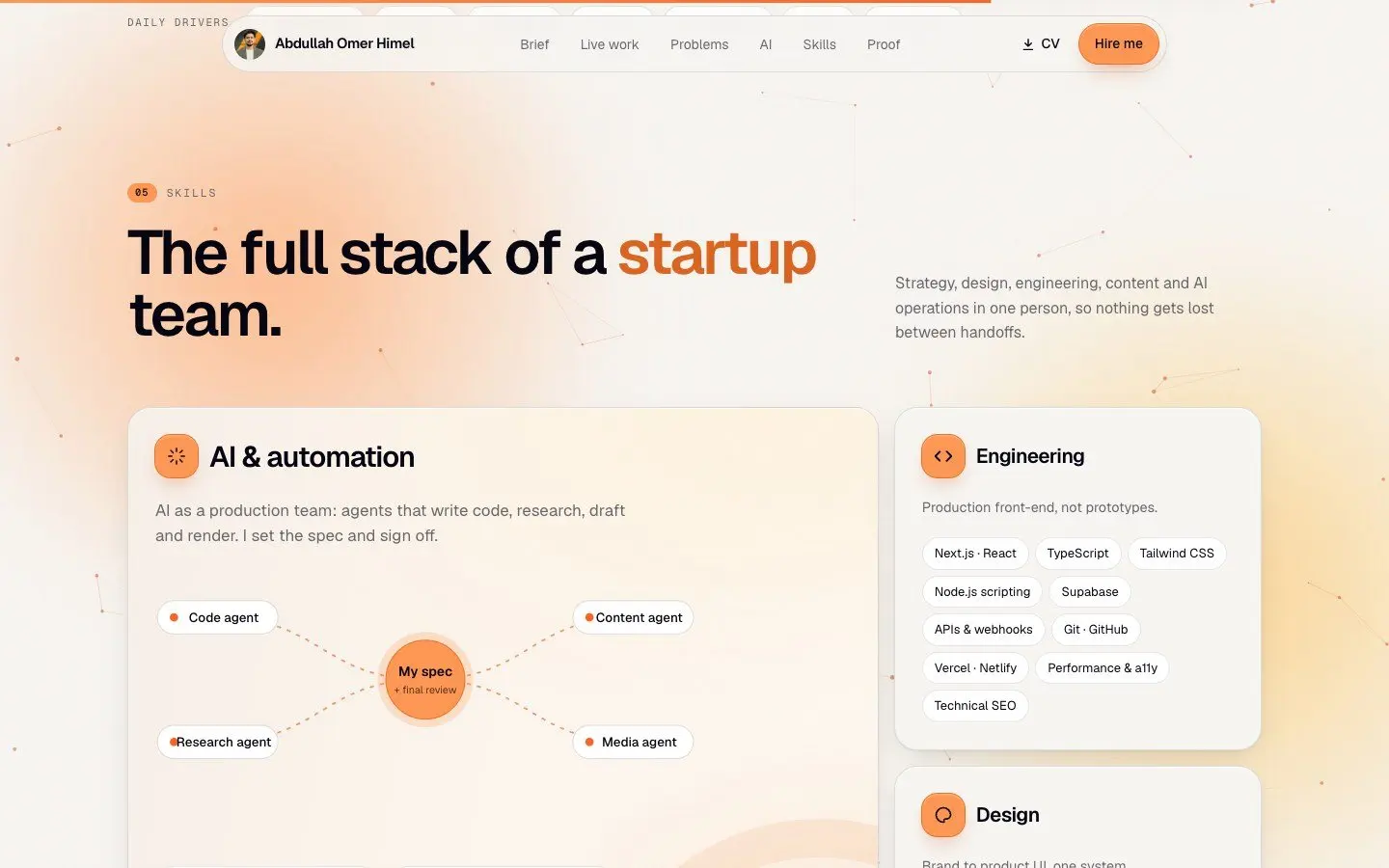
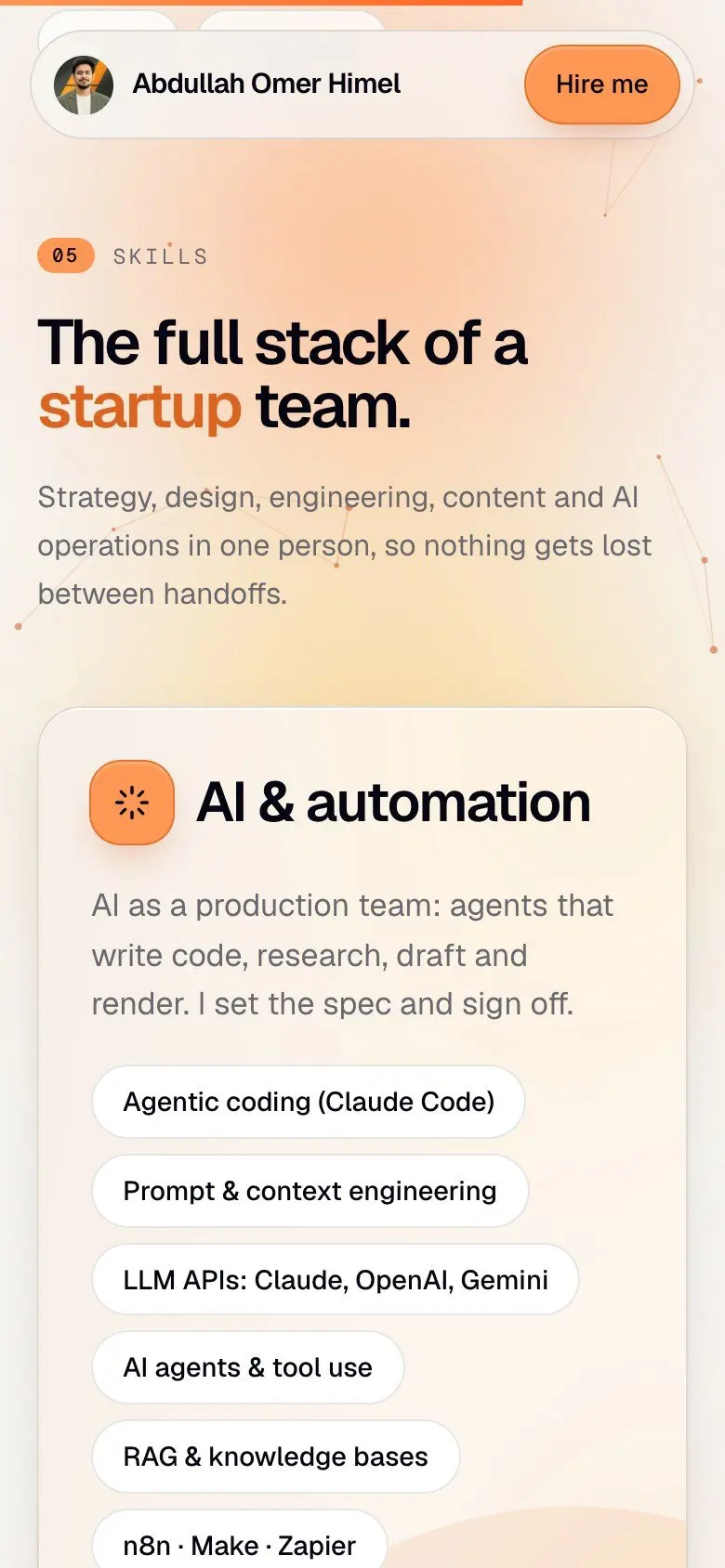
Agents on the skills map.
The skills bento puts AI first: a spec in the middle, with code, research, content and media agents around it, and a human final review.
- 06
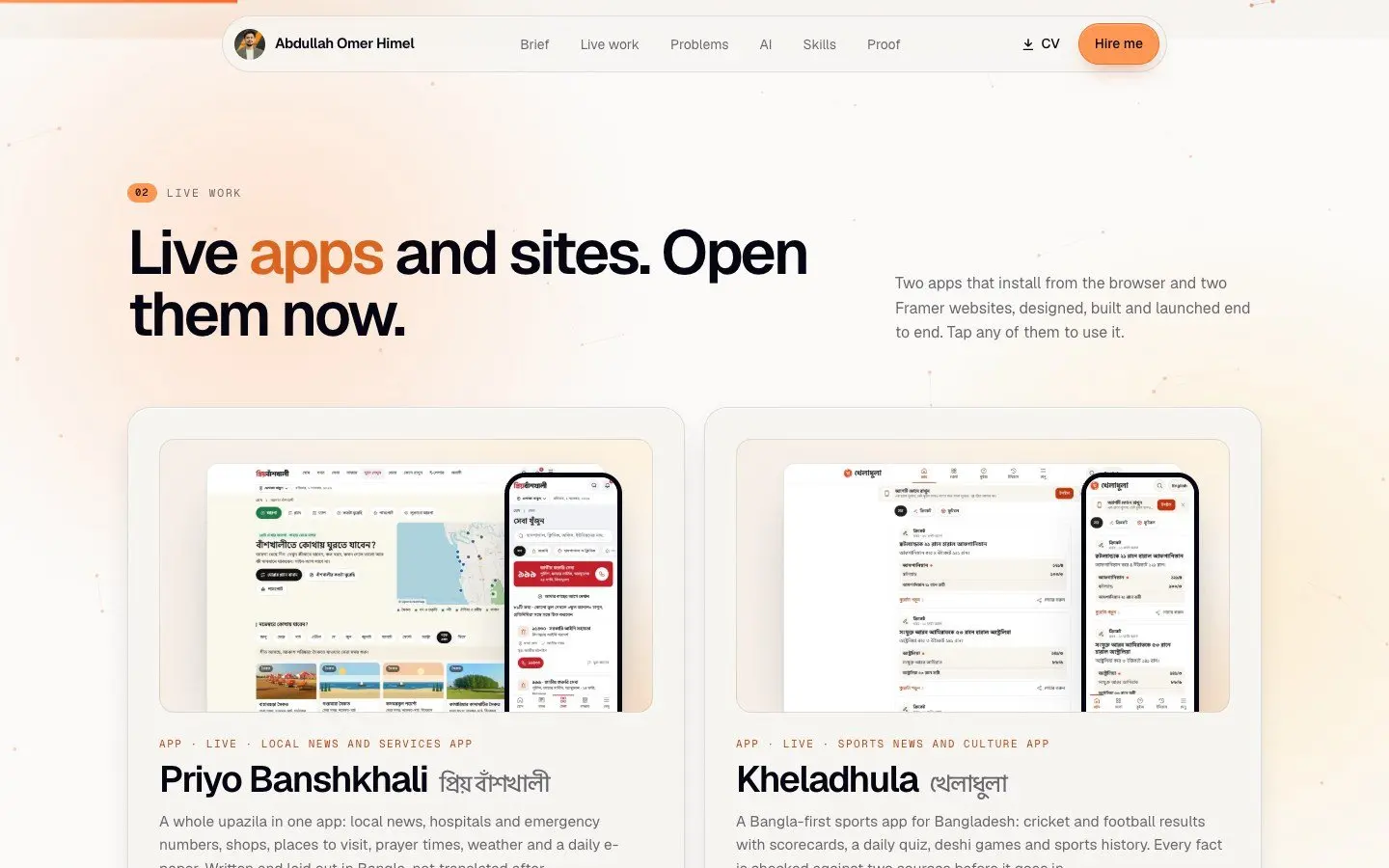
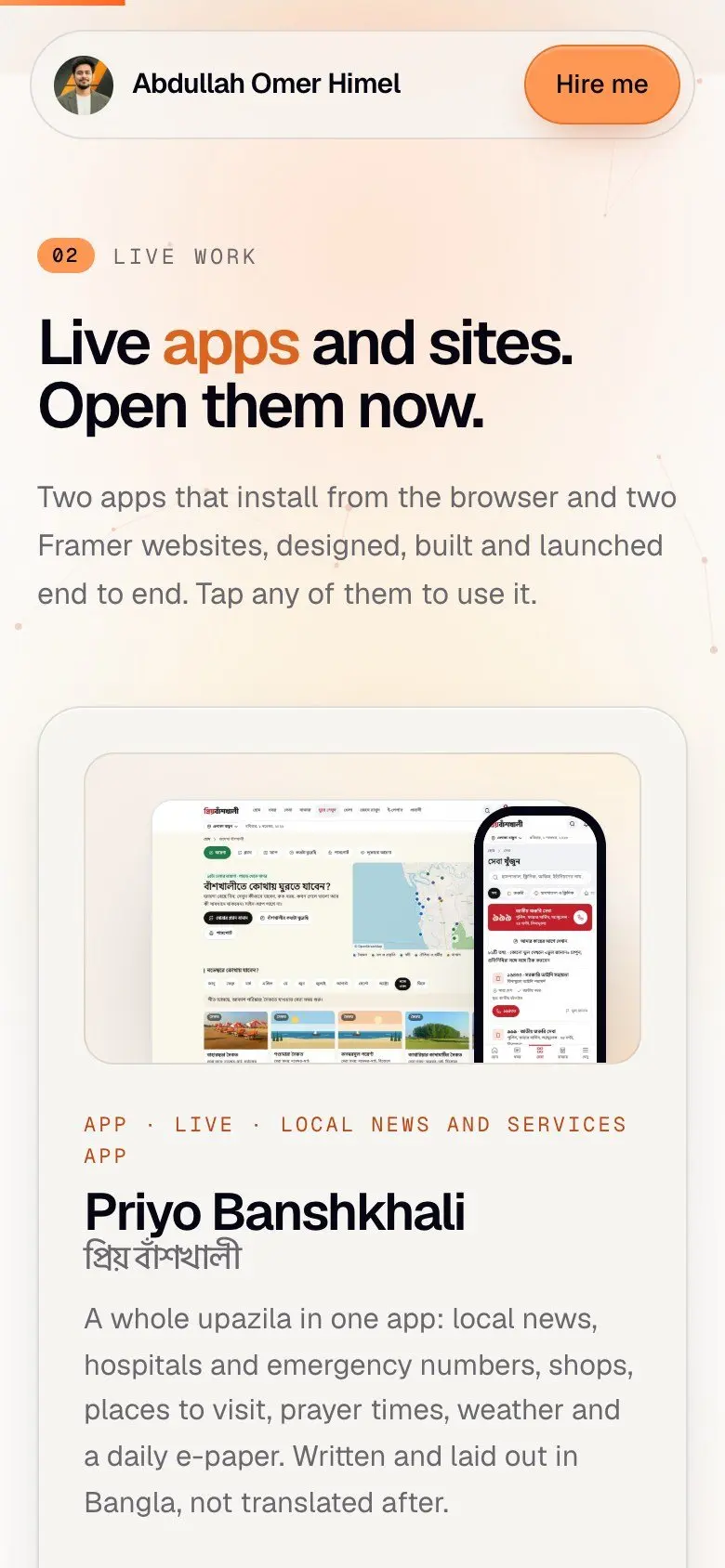
Work you can open, not just look at.
Two apps that install from the browser and two Framer sites, each one tap from the live product.
Want a website like this for your business?
Tell us what you need on a free 30 minute call. You leave with a plan and a price, whether or not we work together.
AI does the typing. A human does the thinking.
The site, the CV, the share image and the intro film all come from one repository, built the way the page says he works.
- STEP 01
Write the spec
Positioning, the page plan and every section's job written down first. AI is only as good as the brief.
- STEP 02
Set up the context
Project instructions, brand rules, a voice guide and memory, so every AI draft starts on brand.
- STEP 03
Build with agents
Claude Code wrote the Next.js site from the spec. Every change was reviewed before it shipped.
- STEP 04
Film with an AI voice
The 60-second intro is a Remotion build narrated by a neural voice model, so it can be re-cut without a shoot.
- STEP 05
Render from code
The one-page CV and the link preview are HTML pages rendered by headless Chrome, in the site's own colours.
- STEP 06
Check before it ships
Facts against the source, a test in a real browser, accessibility, and reduced motion. Then live on Vercel.
The whole page, section by section.
Captured from the live site on 17 November 2026, on desktop and on a phone. Tap any screen to see it full size.
If you need AI that ships real work, start here.
The site is the demo: planned, built, written and rendered with AI in the loop, and checked by a human before it went live.
- Agentic codingA production Next.js site written by Claude Code from a spec, reviewed change by change.
- Context engineeringInstructions, brand rules and a voice guide that make AI output sound like one person.
- AI video without a shootA 60-second intro film made in code, with a neural voice.
- Honest AI positioningEvery piece of work says what AI did and what stayed human.
- A portfolio that gets you hiredRole, fit and proof in the first two screens, and a CV one tap away.
- 6Ways AI is used, one card each
- 6Seats one hire fills, each linked to proof
- 60sIntro film, made in code with an AI voice
- 1Repository for the site, CV, share card and film
Want your skills to read this clearly? Let's build the page.
Positioning, copy, design and build in one sprint: a site that tells a stranger who you are, what you do and where the proof is.